Most plumbing emergencies in Bristol, Norfolk, and Plymouth counties don’t start with a bang. They start with a valve nobody has touched in years, a heating system that quit on a cold night, or a water heater that’s been quietly wearing out in the corner of the basement. By the time you notice, there’s water on the floor and you’re searching for a number to call. The good news is that three habits cover most of the ground, and none of them takes more than an afternoon. We’ll walk through them in the order that matters, starting somewhere you might not expect: your heating system.
Plumbing Maintenance Starts With Your Heating System
Here’s the connection most people miss. When a furnace, boiler, or heat pump stops working in January, the cold gets into walls, basements, and crawl spaces, and your pipes are the first thing to pay for it. A heating problem can turn into a plumbing problem within hours.
That’s why we treat heating, cooling, and plumbing as one system. Whether you have an oil or gas furnace, a heat pump, or an air handler paired with central air, each one either protects your pipes or puts them at risk. From our office in North Attleboro, we serve homeowners across Bristol, Norfolk, and Plymouth counties, and the pattern holds in all three. The emergencies we get called to often had a warning sign first.
Where Is My Main Water Shut-Off Valve, and How Do I Test It?
Tip one is the least glamorous and the one you’ll be most glad you did. Find your main water shut-off valve before you need it. In most homes it’s where the water line enters the house, usually in a basement or utility room and often near the meter. Look for a lever handle that turns a quarter turn, or a round wheel you spin like an outdoor spigot.
Once you’ve found it, test it. Close it, open a faucet somewhere in the house to confirm the water stops, then open the valve again. If it’s a wheel-style valve that hasn’t moved in years, it may be stiff. You want to learn that on a quiet afternoon, not while water is coming through a ceiling. Don’t force it. A valve that won’t turn, or that weeps when you try, is worth a call to a plumber before it becomes urgent.
Age matters here. Homes in Hull, Cohasset, and other coastal towns in our service area deal with salt air and decades of New England winters, and older valves in any house can seize up from sitting untouched. If your home is one of the older ones, assume the valve needs checking.
Last step: tell everyone who lives there. Hang a bright tag on the valve and make sure the teenager, the babysitter, and the spouse who never goes in the basement all know where it is. When water is spreading across a floor, the person who can stop it fastest is the one who already knows where to go.
Can a Furnace Problem Cause Frozen Pipes in Bristol, Norfolk & Plymouth County?
Yes, and that’s tip two: get your heating system checked before the first hard freeze, not after. A furnace or boiler that’s been ignored all year tends to fail when the house is coldest and the pipes are most exposed. An annual tune-up for an oil or gas furnace, a boiler, or a heat pump is the simplest way to avoid that, because worn parts and dirty components get caught before they quit.
Then think about where your pipes actually live. The vulnerable ones run along exterior walls, through unheated basements and crawl spaces, into garages, and under sinks on outside walls. On a bitterly cold night, open those cabinet doors so house heat can reach the pipes, and let a faucet drip slightly if you know a particular line has frozen before. If you’re leaving for a winter trip, set the thermostat to 55 degrees or higher rather than shutting the heat off.
In Plymouth, Hanson, and across our service area, the winter calls we get most often are burst pipes, sewer backups, and water heater failures. Freezing weather puts real stress on older plumbing, and that’s a big part of why. If your furnace is making new noises, cycling on and off, or struggling to keep up, treat that as a plumbing warning too, because the pipes depend on that heat.
If you ever find a frozen pipe with nothing coming out of the faucet, keep a torch or open flame far away from it. Shut off the main, open the faucet so the water has somewhere to go as it thaws, and call for help.
Water Heater and Drain Maintenance for Bristol, Norfolk & Plymouth County Homes
Tip three covers the two things that sit quietly in the background until they don’t: your water heater and your drains. Neither needs much, but both need something, and what they need depends partly on where you live.
Along the coast in Hull and Cohasset, salt air is hard on pipes and fittings. In Bridgewater and other parts of Plymouth County, hard water is common and leaves mineral buildup in water heaters and fixtures. The principle is the same everywhere in our service area: look at this equipment on a schedule, so you decide what to do on your own timeline instead of reacting to a puddle on the floor.
How Often Should I Flush My Water Heater in Massachusetts?
Most manufacturers recommend flushing a tank-style water heater about once a year, and your owner’s manual will tell you what yours calls for. Flushing means draining some water from the bottom of the tank to clear out the sediment that settles there. Skip it for years and that sediment hardens, the heater works harder, and you may start hearing popping or rumbling when it runs.
Hard water makes this more of an issue. In Bridgewater and other parts of Plymouth County, minerals build up inside the tank, and tankless units need periodic descaling for the same reason. If you’ve never flushed yours and it’s been several years, call us before you try it. An old, crusted tank can start leaking at the drain valve once it’s disturbed, and it’s better to learn that with a plumber standing next to you.
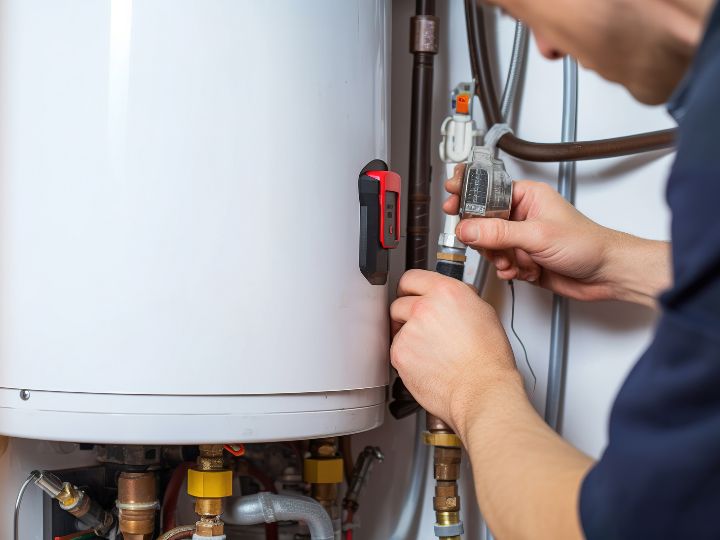
Between flushes, take two minutes every few months to look the heater over. You’re checking for rust streaks, moisture around the base, a dripping relief valve, and water that comes out rusty or only lukewarm. Check the date on the label too. A tank that’s nearing ten years old, or past it, is worth planning for, since replacing one on an afternoon you choose is a very different experience than replacing one after it gives out on a Saturday night.
A tank can deliver hot water right up until the day it leaks.
How Do I Keep AC Drain Lines and Household Drains From Backing Up?
This is the part of tip three that surprises people. Your air conditioner, heat pump, and air handler all pull moisture out of the air, and that water has to go somewhere. It runs through a condensate line to a drain, and when that line clogs with algae and gunk, water backs up into the drain pan and eventually shows up on your ceiling or floor. At the start of cooling season, find the line and look for water pooling in or around the pan. If the pan is full, or there’s staining below the unit, have someone take a look before the first heat wave.
Household drains are simpler. Keep grease, coffee grounds, and wipes out of them, including the ones labeled flushable. Be wary of chemical drain cleaners too, which can be rough on older pipes and don’t fix whatever is causing the clog. A slow drain that keeps coming back is usually telling you the problem sits farther down the line, and sewer backups are among the emergency calls we see in winter across Bristol, Norfolk, and Plymouth counties.
Plumbing Maintenance Help for Bristol, Norfolk & Plymouth County Homeowners
To recap: know where your main shut-off is and test it, get your heating system ready before winter so it protects your pipes, and check your water heater and drains on a schedule. None of it is complicated, and all of it beats finding out the hard way.
If you’d rather have someone else do the checking, that’s what we’re here for at Dempsey Energy. We’re a family-owned company that has served Massachusetts homeowners since 2002, and we handle heating, cooling, and plumbing under one roof. Call us if you have a valve that won’t budge, a water heater you’re wondering about, or a furnace you’d like checked before the cold arrives. If something is already leaking, our 24/7 emergency service is there for that too. When you call, ask about the Dempsey Comfort Club and any current offers.