If you’re reading this in September or October, your heating system is in the quietest stretch it gets all year. In a few weeks it goes from idle to running daily, and across Norfolk, Plymouth, and Bristol counties that switch usually happens around the first hard freeze in early November. Nobody wants to learn what’s wrong with a boiler on the coldest night of the year.
We’ve put together three things worth doing now. You’ll prep the system you actually have, learn what a real tune-up looks like, and make a plan for repair or replacement before you’re forced into one. First, let’s talk about why timing matters so much.
Why October Is the Month to Get Your Heating System Ready
Heating systems rarely give out in October. They give out in January, after weeks of daily running, when something finally lets go. By then, every other homeowner in Dedham, Plymouth, and North Attleborough is calling about the same kind of problem, and schedules fill up fast.
October is the sweet spot. The weather is mild enough that a technician can shut a system down, look it over, and bring it back without anyone sitting in a cold house. The first hard freeze around Boston and the South Shore tends to arrive by early November, so you get roughly one calm month before the system has to run every day.
Norfolk County also runs a little colder across a full year than Plymouth or Bristol, by one third-party count, which leaves a tired system there less room to coast.
Tip 1: How to Prepare an Oil, Gas, or Heat Pump Heating System for Winter
Start by naming what you have, because winter prep looks different for each system. Roughly 29 percent of Massachusetts homes still heat with oil, and only about 3 percent use heat pumps, so most of our neighbors from Hanover to Dedham are running an oil burner, a gas furnace, or a boiler.
If you heat with oil, check the tank first. State consumer guidance says to keep it above about a quarter full, because a nearly empty tank can stir sediment into the fuel line and burner. It’s an easy thing to overlook once the weather turns, and we deliver heating oil as well as service the equipment, so we can look at both together.
With a gas furnace, most of the job is airflow. Swap the filter, then plan on doing it about once a month through the heating season. Clear boxes and furniture away from vents and returns too. A dirty filter makes a heating system work harder, so filters matter in winter and not only for air conditioning.
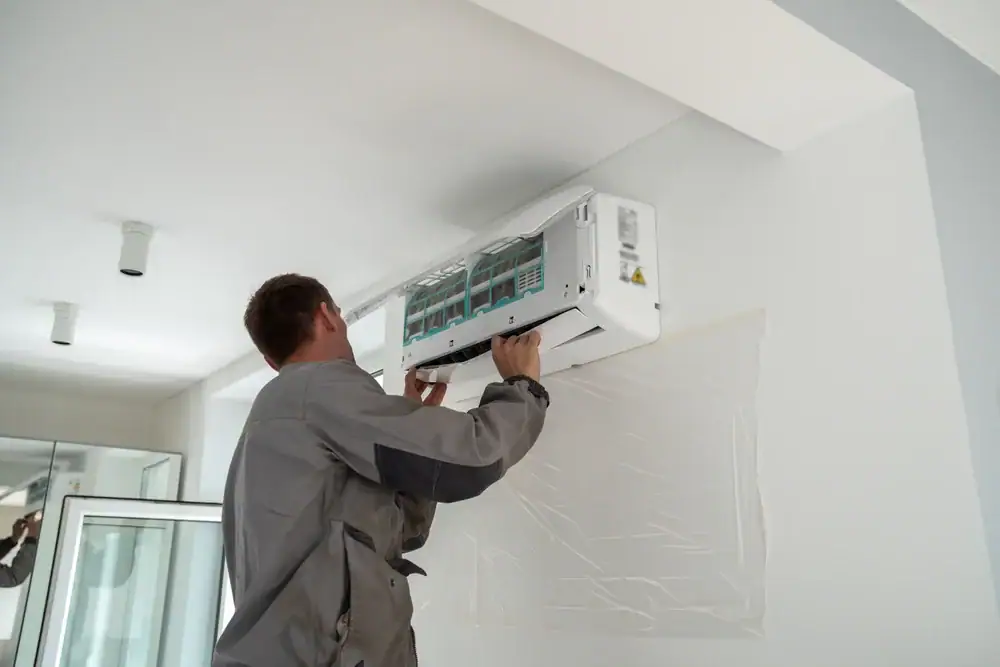
If you have a heat pump or ductless system, clear leaves and debris from around the outdoor unit now, and keep snow and ice off it later. Don’t forget the air handler, the indoor unit that moves the air around your house. Its filter and blower get ignored more than almost anything else in the system.
Finally, test your thermostat. Switch it to heat and set it about five degrees above room temperature. If nothing starts, you want to find that out in October. While you’re at it, shut down the central air, insulate exposed pipes, and close off outdoor hose valves before the freeze.
Tip 2: Do You Really Need a Heating System Tune-Up If Yours Still Works?
This is the question we hear most, and it’s a fair one. A lot of homeowners have had a tune-up visit that felt like a quick glance followed by a sales pitch. So here’s what a good one should look like, no matter who you hire.
For an oil burner, the visit should include cleaning the burner and testing combustion, and the work has to be done by a technician holding a Massachusetts oil burner certificate. For gas furnaces and boilers, the technician should check how the system is burning and look at the parts that wear out. For heat pumps, that means the outdoor unit and the defrost cycle.
The part people remember most is what happens afterward. You should get a plain explanation of what was found, which items can wait and which can’t, and your options laid out clearly if something needs fixing. If a part is worn, ask to see it.
Does a system that’s running fine need one? Usually, yes. The problems that matter tend to develop quietly. Plenty of homes in Norfolk and Plymouth counties are older, and an older house often means an older system that has been running without complaint right up until it doesn’t. A tune-up gives someone a chance to catch the small stuff while you can still pick your appointment time.
We’ll also be honest about what it won’t do. A tune-up supports efficient operation, but nobody can promise a specific drop in your heating bill, and we won’t try.
Tip 3: Plan Your Heating Repair or Replacement Before the First Freeze
The third tip is the one most people put off: deciding ahead of time what you’ll do if your system is near the end of its life. Replacing equipment in late fall is stressful. Parts can run behind, installers get busy, and you end up making a big decision in a cold house.
Doing that thinking in October, or earlier, changes everything. You can compare options, ask questions, and get a detailed written estimate without the pressure of a dead furnace. We offer free estimates, and a good one should lay out more than one choice so you can decide what fits your home and your budget.
Waiting is rarely the cheaper move, and it’s almost never the calmer one.
Should You Repair or Replace Your Furnace or Boiler?
Here’s the rule of thumb we give our customers. If your system is under 10 years old and hasn’t had major problems, repair usually makes sense. Past that point, or once the repairs start stacking up, it’s worth sitting down and looking at the bigger picture. Neither answer is automatic, and a good technician shouldn’t push you toward either one.
The bigger picture has changed lately. Mass Save has announced it will stop offering rebates for furnaces, boilers, and other fossil-fuel appliances, even highly efficient ones, and will focus on heat pumps. Those rebate amounts and rules change from year to year, so check masssave.com for what’s current before you decide anything. Participating installers are required for heat pump rebates, so ask about that up front.
That doesn’t mean your oil or gas system has to go. Plenty of homes in Plymouth County, from coastal spots like Marion and North Scituate to inland towns like Middleboro, still run on oil, and those systems keep working when they’re maintained. It just means that if yours is aging, a calm conversation about options is smarter than a rushed one.
What about heat pumps in a New England winter? Cold-climate models are built to keep heating well below freezing, and some homeowners pair one with a furnace as a backup. How well it works still depends on your house, the sizing, and the installation. Utilities also vary by town, which affects what a heat pump costs to run. We install furnaces, boilers, and heat pumps, and we can talk through oil-to-gas conversion where gas is available, so we have no reason to steer you one way.
How Do You Remember to Schedule Heating Service Every Year?
Most people don’t skip the annual service on purpose. They forget, and then it’s late October and everyone is booked. That’s the reason we built the Dempsey Comfort Club.
Members get annual tune-ups, priority scheduling for routine and emergency calls, and discounts on service calls and repairs. We handle the scheduling and the reminders, so the appointment doesn’t depend on your memory. Heat pump customers can also get system monitoring, and extended warranty options are available. Pricing gets talked through when you schedule service, so you can ask questions first.
What if the heat goes out anyway, whether you’re in Raynham, North Attleborough, or anywhere else we serve in Bristol County? Call us, tell us what’s happening, and we’ll give you a realistic timeframe and keep you updated. We protect your floors and furnishings when we’re in your home, and we stand behind our work with manufacturer and labor warranties.
We’re a family-owned company that started in 1992 as an oil company, and we’ve since served more than 12,000 homeowners across Norfolk, Plymouth, and Bristol counties. Heating, cooling, plumbing, and fuel under one roof means one call covers a failing furnace, a leaking water heater, or a pipe you’re worried about.
Get Your Heating System Ready Before November
Prep the system you actually have, whether that’s an oil tank, a gas furnace’s filter, or a heat pump’s outdoor unit. Get a tune-up that explains itself, and make your repair-or-replace plan while the weather is still on your side. October gives you room to do all three without a rush.
Whether you’re in Plymouth, Dedham, North Attleborough, or one of the smaller towns in between, the early-November freeze arrives on schedule. Your system will be ready for it, or it won’t.
If you’d like a second set of eyes on your heating system, or you want to hear how the Dempsey Comfort Club could take annual service off your to-do list, reach out to Dempsey Energy. We’ll tell you what we see, give you your options, and let you decide.